
Social media is not the solution to depression among young people
More than 40 per cent of students in higher education are experiencing symptoms of depression — warns a new volume of studies by the Institute for Media Studies (MTMI) of the National Media and Communications Authority (NMHH). The authors of the publication also highlight that young people often look to social media to relieve their anxiety, but this usually only deepens its real causes.
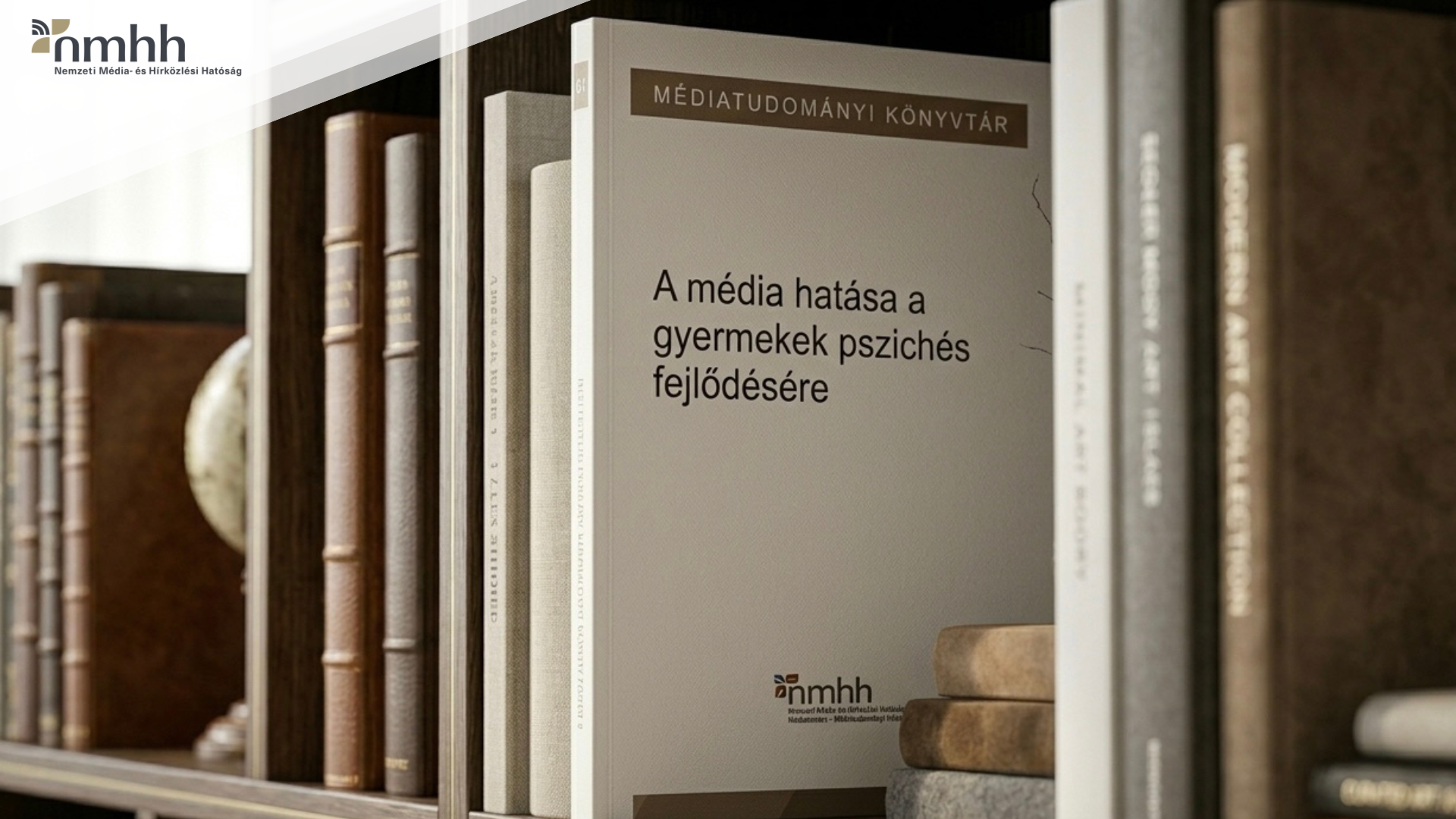
The recently published 61st volume of the Media Science Library series, edited by Levente Nyakas, Head of the Institute, deals with the “The impact of media on children’s psychological development”. The publication contains a written summary of the papers delivered at a previous academic conference of the same title, and presents a cross-disciplinary overview of the relations between the digital environment and the emotional, social and legal situation of minors.
Among other things, the volume sheds light on the critical state of mental health among students in higher education in Hungary: according to the research presented in Annamária Tari’s study, more than 40 per cent of students suffer from symptoms of depression, and almost as many report suicidal thoughts. Young people often use social media as a harmful coping mechanism to ease anxiety, even though it usually exacerbates their existing mental health problems. The expert also points out that Generation Z and Generation Alpha are among the most vulnerable groups in the digital world, as their personal development is influenced by social media use from a very early age.
A joint study by Patrik Koncz, Zsolt Demetrovics and Orsolya Király reveals that nearly 72 per cent of Hungarian adolescents regularly play video games, and boys spend an average of more than 17 hours a week playing them. The authors stress that escaping into virtuality can often be a symptom of an existing problem, such as ADHD or depression, and problematic use can lead to serious social and academic difficulties.
The volume also addresses in detail the traumatising effects of harmful media content. In her paper, Melinda Hal points out that the co-occurrence of sexuality and aggression can induce “bullet-like” changes in the developing nervous system. Gyöngyvér Jantek points out that young people today encounter pornographic content for the first time between the ages of 11 and 12, which greatly shapes adolescents’ sexual self-image and needs, often setting unrealistic expectations.
In the sociological section of the volume, Levente Székely provides a comprehensive portrait of the “wired” generation, in which 97 per cent of young people are daily internet users and 43 per cent are permanently online. Through the phenomenon called “TikTok warfare”, Ádám Guld shows how Generation Z influencers have become the primary sources of news about the Russia-Ukraine war among young people, blurring the line between objective information and the subjective sharing of experiences.
The final section of the volume focuses on legal challenges. Levente Nyakas points out the contradiction that while films on physical media such as DVDs are subject to strict child protection rules in the host country, streaming services are subject to the country of origin principle, which often requires a lower level of protection. Kinga Sorbán analyses the impact of the EU’s Digital Services Act, the DSA, while Zsuzsanna Éva Monori presents the practical possibilities and limits of the NMHH, for example, in relation to the presentation of violence on reality TV and news programmes. In her study, Ildikó Fazekas reviews international trends and practices in advertising regulation that serves the protection of minors, emphasising that responsible marketing is also in the economic interest of market players if they wish to preserve brand equity.
The aim of this volume is to promote the practical application of scientific findings in education, child protection and policy-making. The publication by the Institute for Media Studies is now available and can also be downloaded in digital form from the MTMI website.