
The child as a brand
Child labour or just a game for children producing content? The kidfluencer research by the National Media and Infocommunications Authority (NMHH) sought answers to questions such as how visibility becomes a burden, likes turn into a measure of performance, and “proud posting” evolves into exploitation.
One of the most controversial forms of children’s online presence is the kidfluencer phenomenon. The term “kidfluencer” refers to minors who are featured in commercial content on social media platforms, often with the active involvement of their parents. The research conducted in autumn 2025 on behalf of the NMHH underlines that the kidfluencer phenomenon should not be regarded as innocent fun, as it profoundly shapes children’s self-image, relationships and consumer choices. Influencers – whether minors or adults – are the brand ambassadors of our time. But the younger you are, the less you realise that online content is an advertising medium. The younger the child, the more likely they are to look to their peer opinion leader as a credible role model, a reliable reference point; indeed, many even call the kidfluencer they follow their friend.
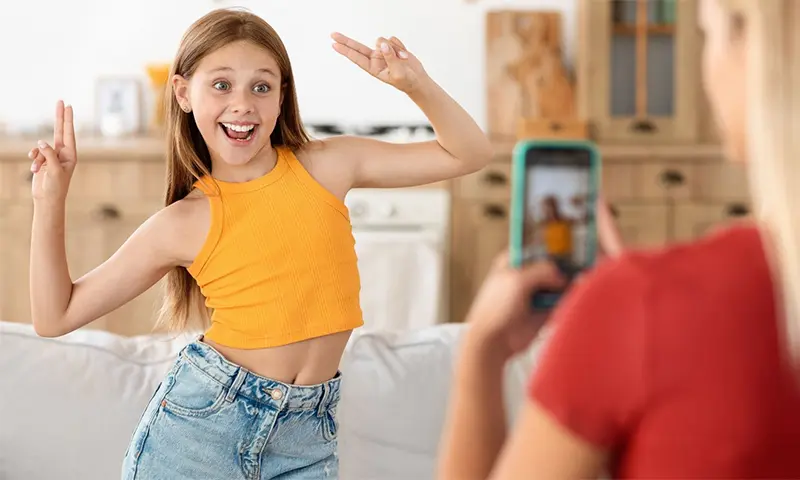
And the idealised image seen on social media inevitably triggers peer comparisons, which makes the underage character on screen seen by others as more beautiful, successful or happier than themselves. This can distort self-esteem and increase the risk of developing body image disorders. Children who create digital content may also be exposed to psychological hazards. Although for them being a kidfluencer is both fun and work at the start, playful creation may gradually turn into a commitment, a pressure to deliver. Collaborations and appearances are often tailored to market expectations, making online presence a consciously built and managed brand. Content production may come at the expense of learning, friendships and relaxation, while online presence can raise anxiety in posting minors and reduce their sense of safety. Their self-image is increasingly being informed by online feedback: likes, comments and views are becoming the most important measures of their value.
One of the key lessons of the research is that what psychology describes as mental risk, often becomes a question of fundamental rights, children’s rights and labour law guarantees. For example, sharing personal life situations, which contributes to the vulnerability of children, is a credibility prerequisite for an influencer. Young people who are active on social media are more exposed to the various forms of online abuse: their personal data can be stolen or they can be harassed in various ways.
The term “branded childhood” is now a well-known concept, expressing how children’s everyday lives have become digital capital – which violates their personality rights, such as their right to privacy. The contents of kidfluencers are often organised, edited and managed by others, typically their parents. Where a child is seen as a brand in its own right, as an extended “product” of the parent, the parent’s right to upbringing and custody may conflict with the child’s best interests. The parent is both a legal representative and the economic beneficiary of child labour, as the child usually has no control over the income generated.
The research underlines the need to protect children involved in content production, to maintain a balance between online and offline, and to allow time for learning and leisure. To protect minors in online spaces, it is essential for parents to be aware of basic safety precautions – for example, to respect the age limit for registration, to safeguard children’s personal data, and to talk to them about how the online space works and the dangers it poses. Parents should also support their children online, and act as moderators to filter the reactions, comments and messages of their followers. It is very important to manage the contracts and partnerships of kidfluencers in a conscious way, and to provide the necessary professional (legal, psychological, economic) assistance.
In the video below, we summarise the key details of the kidfluencer research. The video can be freely embedded and used.