
Are we approaching an era of completely conscious ignorance?
In recent years, the rapid advancement of Artificial Intelligence (AI) has transformed our everyday lives to such an extent that we need to develop a kind of awareness in this area as well, especially to strengthen critical thinking skills, said the National Media and Infocommunications Authority (NMHH) at an event organised by the Institute for Media Studies. The conference also addressed the lack of sufficiency in teaching the effective use of AI and the low level of trust in it.
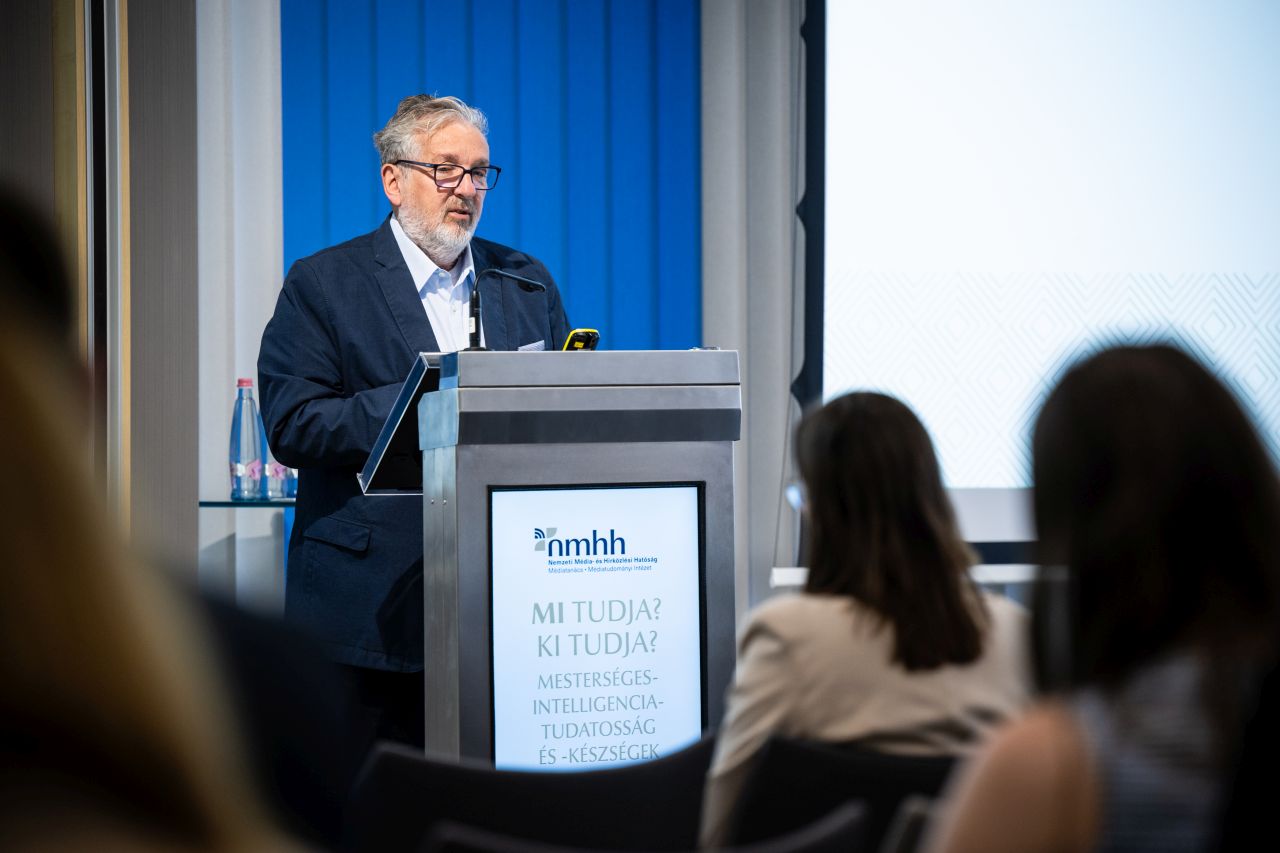
Károly Szadai, member of the Media Council
Our news-reading habits are now driven by algorithms but what we gain or lose by it remains to be seen. “So far, it seems that we are not fully prepared for where the world is heading in this respect”, said Károly Szadai, member of the Media Council, in his opening speech.
“Lately, we have put science and data above all else, which makes us feel a little more invincible, so it’s no wonder we often misjudge our position.” “The AI psychosis only exacerbates this”, Prof. Dr. Petra Aczél, Professor at Széchenyi István University claimed in her address. The head of research at the NMHH’s Institute for Media Studies presented a number of interesting data to the attendees. She stated, for example, that from 1978 onwards, the human intelligence quotient (IQ) had fallen by 7 points from generation to generation, with children asking an average of 300 questions a day by the age of 4 and none by the age of 14. Surveys showing a decrease in focused attention from 2.4 minutes to 47 seconds a day between 2012 and 2024 are also telling, and we touch our smartphone 2,617 times a day. The expert also mentioned that over 52 per cent of online content was generated by AI, while it took a maximum of 29 days to renew an AI model. And contrary to Asia, confidence in AI is still somewhat low in Europe and the US.
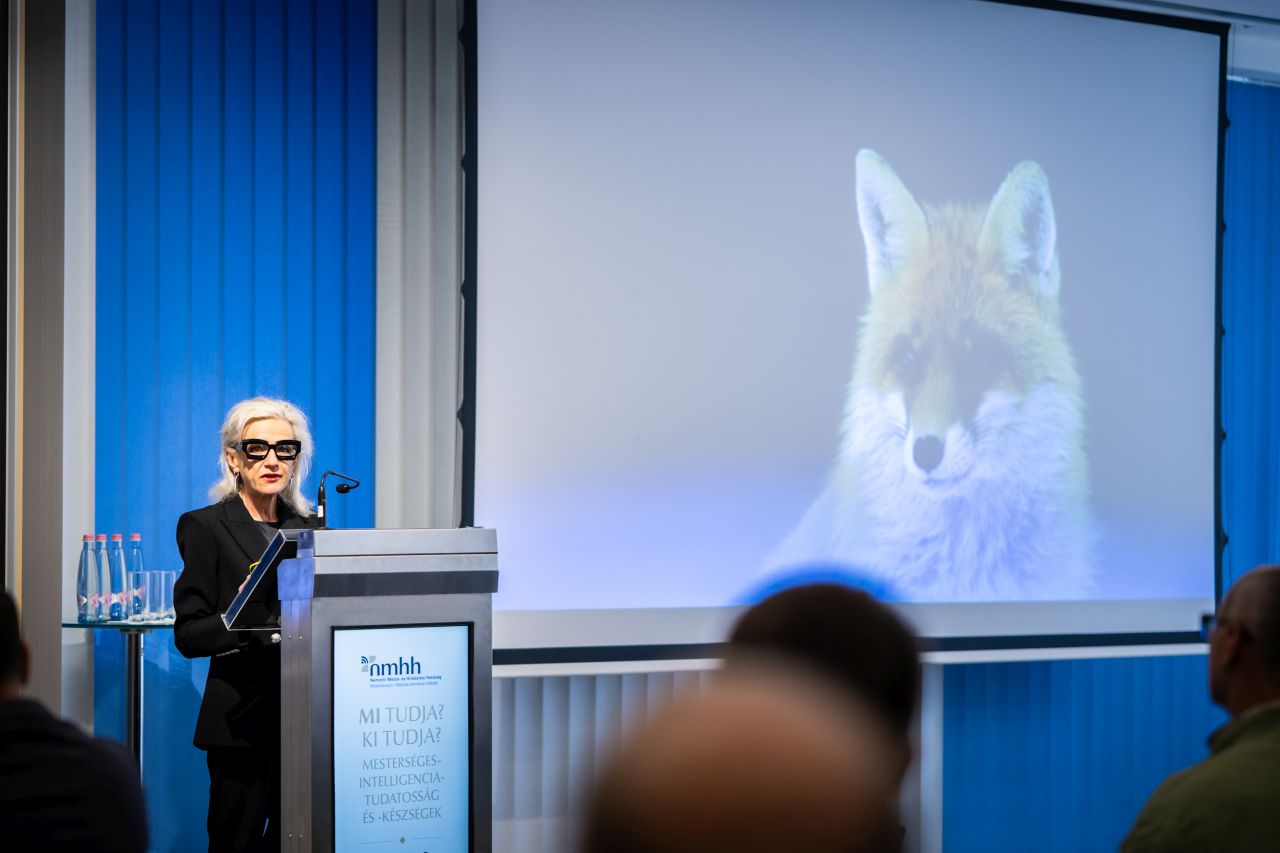
Prof. Dr. Petra Aczél, professor at Széchenyi István University
Referring to the results of an international survey, Petra Aczél explained that the level of human knowledge was inversely proportional to skills such as courage, risk-taking, empathy and creativity: skills that would be most needed in the future. “We are facing a future of completely conscious ignorance”, she stressed, adding that the most urgent task is not so much to “improve” AI but to “improve” the human being, for example, by making better use of the right hemisphere of our brain.
“Energy-based thinking could be an important prospective capability”, futurologist Árpád Rab thinks. The head of NMHH’s Innovation Lab believes that the gradual increase in our energy consumption does not go hand in hand with a steady improvement of our quality of life, so we need to use energy smartly, and AI can be a good partner in this, for example in solving the increasingly critical global water problem or in the field of healthcare. The latter has seen revolutionary changes over the past three years, with a number of budding innovations that could soon vastly change our lives. “This is what artificial intelligence as a technology is all about, and not about our children not learning in school”, Árpád Rab concluded.
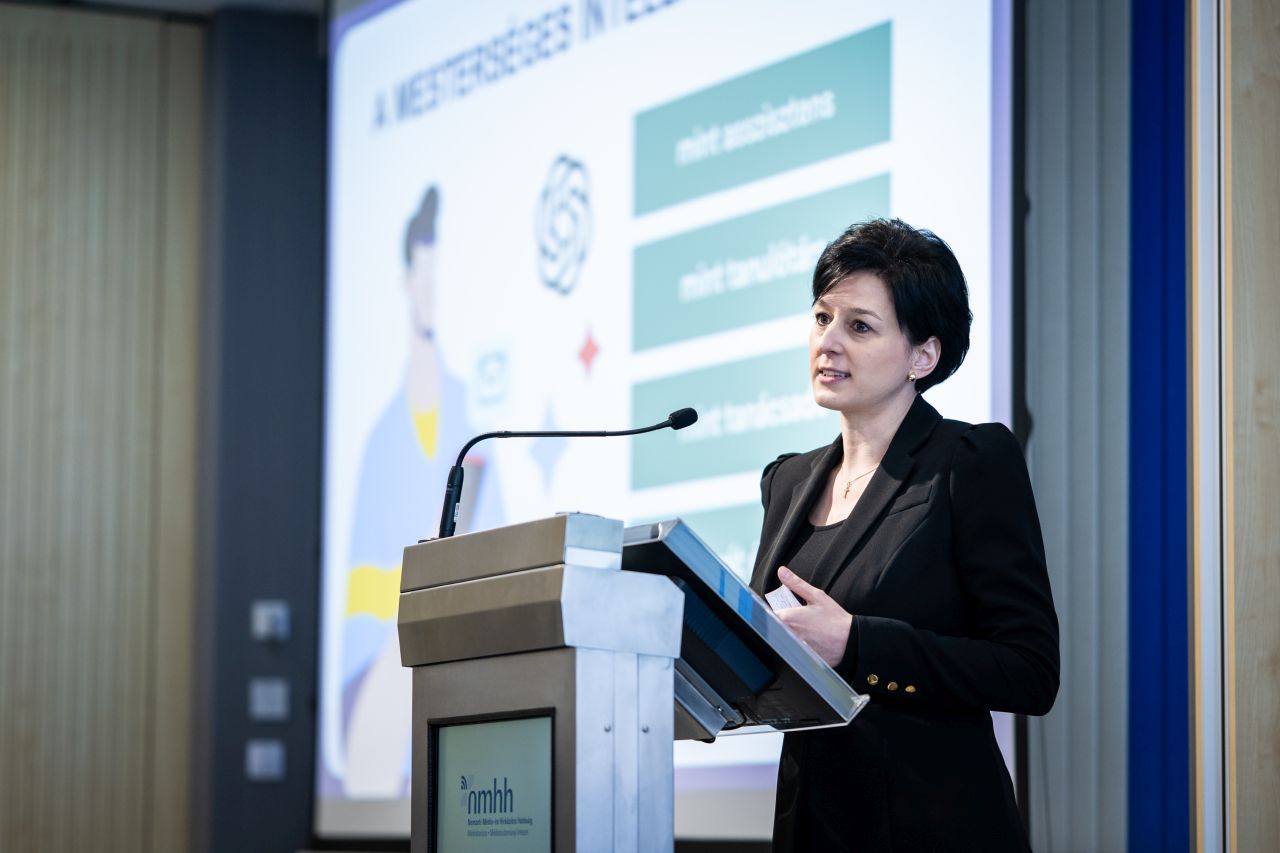
Veronika Pelle, media literacy expert at the NMHH
In her presentation, Veronika Pelle, media literacy expert at the NMHH drew attention to the fact that AI was no longer just a technical tool but a social actor, and as such had bred a new kind of dependency in people. According to the expert, one of the foundations of media literacy is the development of critical reception skills, but today this is no longer enough: we also need to understand responsible, ethical behaviour and the emotional dimensions. Summarising the results of the NMHH’s digital parenthood research, she said that young people whose parents had a more active digital strategy, for example, by regularly talking to their children about the use and the dangers of the online space, also become more media-conscious. “Let's take advantage of the benefits but avoid the dangers of the technology”, she added.
Speakers also explored the role of AI from a number of other perspectives. Prof. Dr. László Kovács, Vice Rector for Science at the Ludovika University of Public Service, spoke about the growing presence of AI in scientific research and higher education, which he believed was more of a blessing than a curse, if used properly and “wisely”. Tamás Door, an expert from Mediaworks discussed the most important applications of AI in media and corporate operations as well as the opportunities offered and the risks posed by the technology; he thinks that AI is not only a technology but also an organisational decision, responsibility and control. Dr. Dávid Farkas, data scientist at Principle Zero Ltd. gave a presentation entitled “The cognitive cost of generative AI: the new challenges of creative thinking”, in which he highlighted that although generative AI (gAI) was creative, it was not capable of problem identification, self-review, or reframing information, which were characteristic of human creativity. Therefore, we also need to be able to decide when not to use gMI, even by consciously limiting ourselves to using tools such as a pen and paper. Dr. Nóra Kepe, lecturer at the Faculty of Humanities and Social Sciences of Pázmány Péter Catholic University and social researcher spoke about the (therapeutic) culture-shaping effect of AI: AI thematises thinking about the soul, normalises and makes therapeutic discourse acceptable, and also medicalises psychological phenomena, i.e. it contributes to identifying and treating them as diseases.
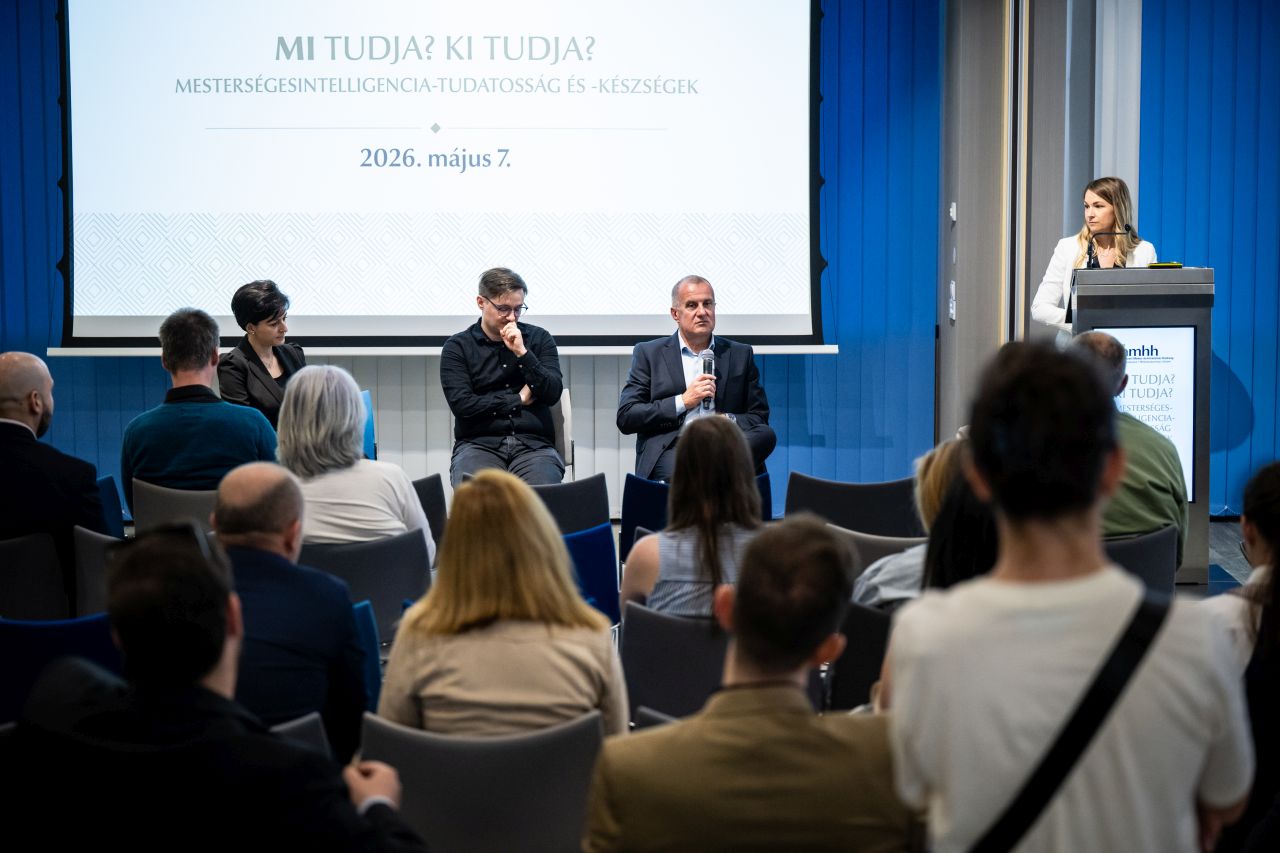
Closing panel discussion at the professional conference organized by the NMHH Institute of Media Studies
The role of AI in the world of news was examined in a presentation by Dr. Zoltán Veczán, a columnist of Mandiner, while the conference concluded with Dr. Ágnes Veszelszki, Dean of the Nemeskürty István Faculty of Teacher Training at the Ludovika University of Public Service and Deputy Head of Research at the NMHH Institute for Media Studies who presented the findings of her empirical research on the role of politeness in human-machine interaction, the first such research in Hungary: AI chat systems are basically tuned for skillfulness, but the user can also influence the chatbot’s style in their own account with their instructions. Moreover, the manner of speach used in the interaction with the chatbot can also affect our communication with humans.
The conference was a great succes, as it drew considerable interest with active audience participation: the excellent presentations led to a number of thought-provoking questions from the audience at the end of each session, stimulating professional dialogue and ensuring that an active discourse on the topic continued after the event and that the attendees remained aware of the importance of the problem in the long run.
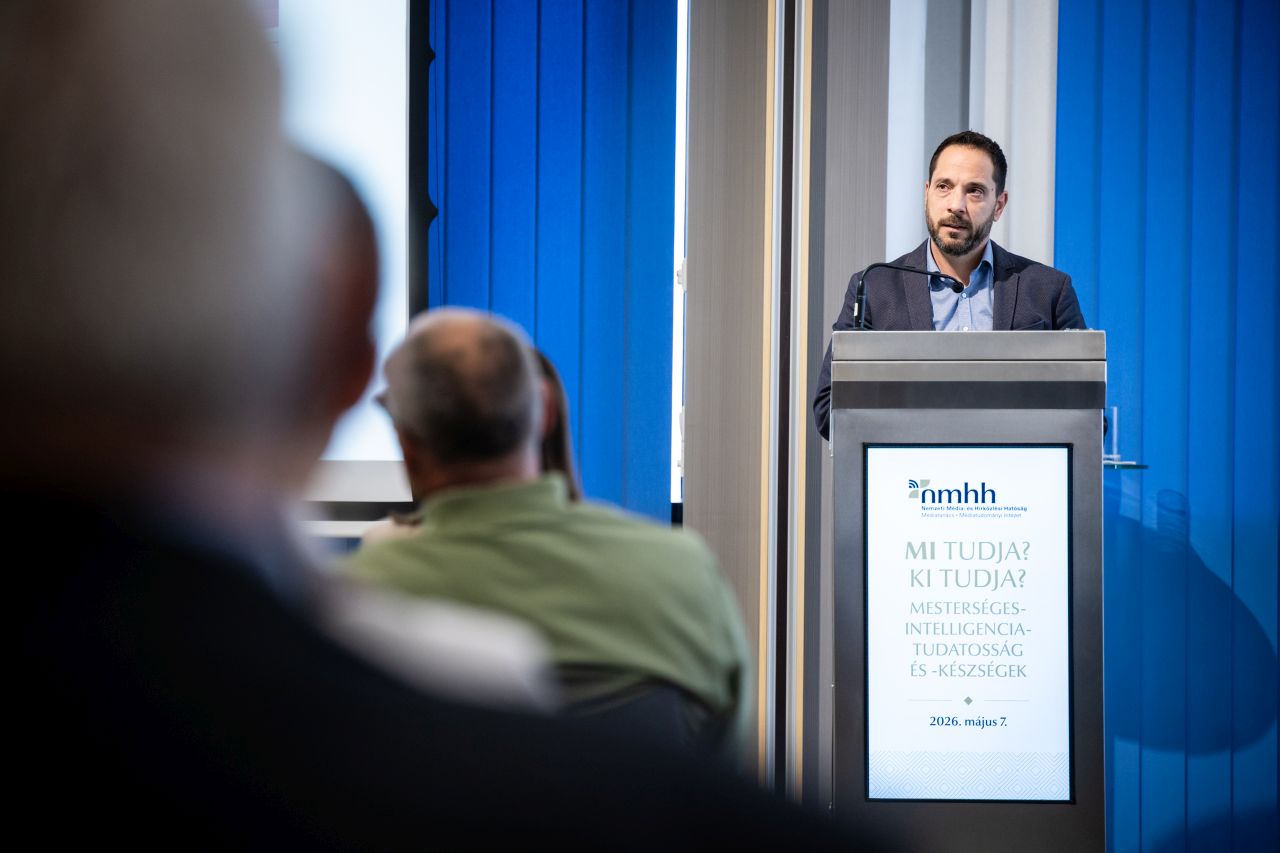 Door Tamás
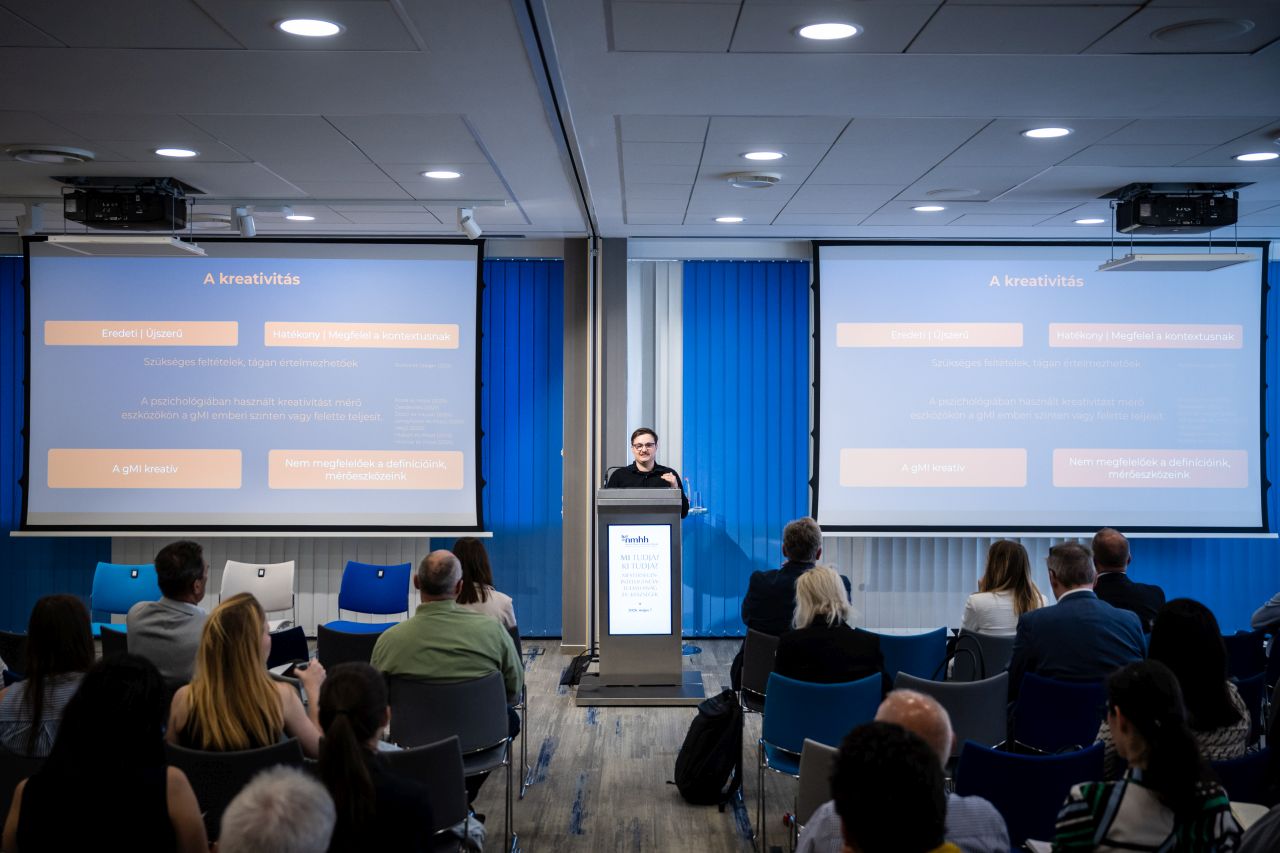 Farkas Dávid
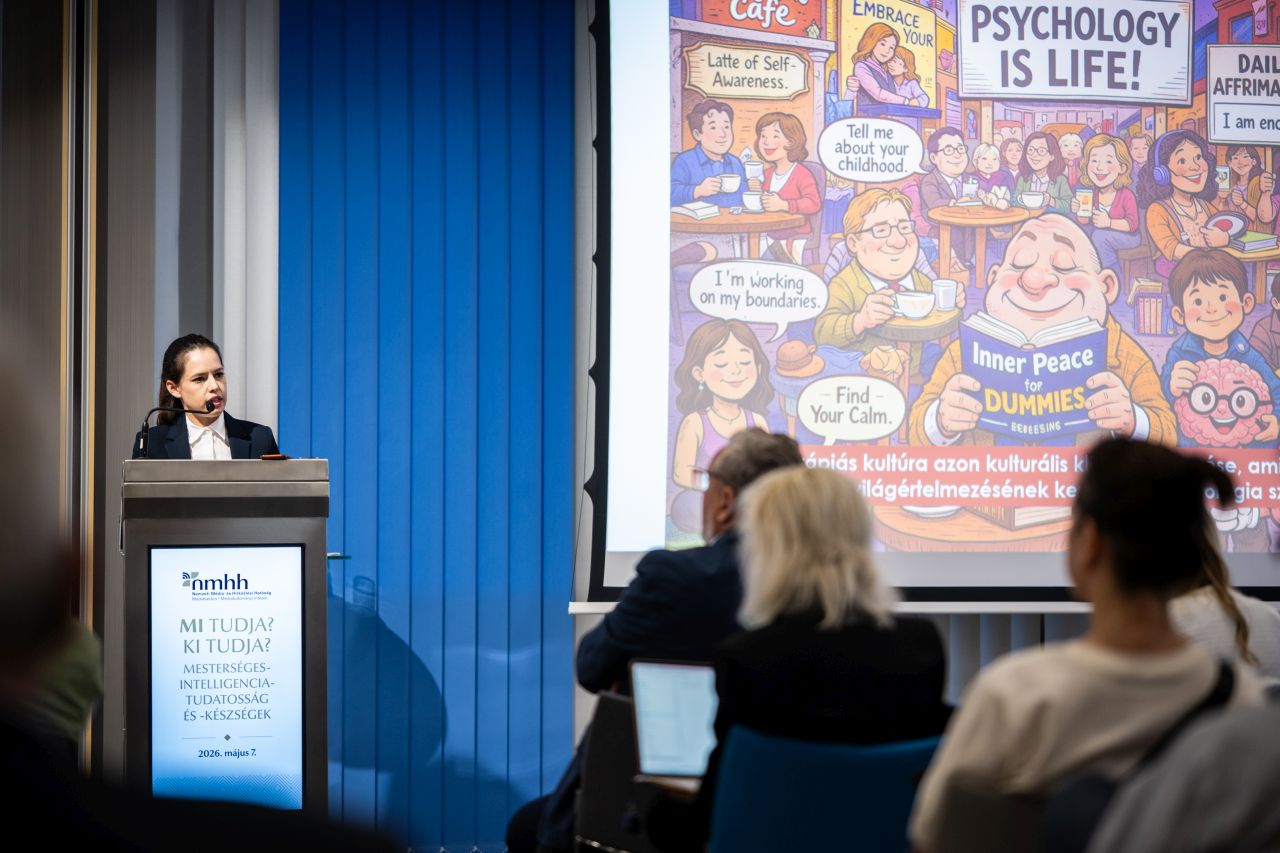 Kepe Nóra
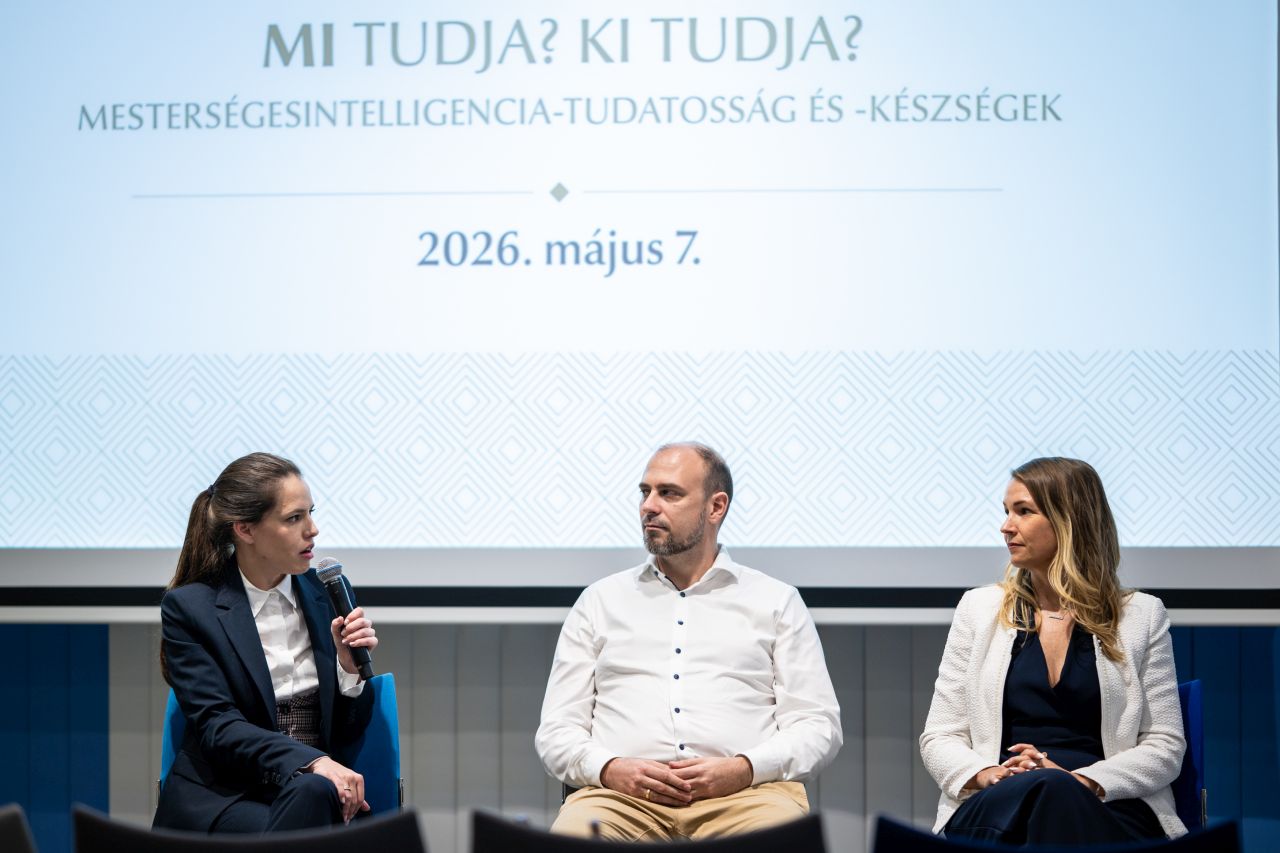 kerekasztal-beszélgetés
 Veczán Zoltán
 Veszelszki Ágnes